
The fifty-year-old comic book we’re discussing today is something of a strange duck (sorry), in that while the bulk of it is devoted to the beginning of a new storyline concerning the titular character’s campaign for President of the United States, the first five of its seventeen pages — as well as the Gene Colan-Tom Palmer cover shown above — are given over to the wrap-up of a story mostly told, but not quite finished, in the previous issue. So we’re going to need to take a look at Howard the Duck #6 before we look at #7. And since the last issue we covered before this was #4, back in April… and since #5 sets up #6 pretty directly… we’re going to need to at least quickly summarize the events of the former issue’s “I Want Mo-o-oney!” before we even do that. All clear? Great! So let’s begin.

Art by Gene Colan, Steve Leialoha, and John Romita.
As the story’s title’s callback to Barrett Strong’s 1959 hit single indicates, HtD #5 is all about the quest for the lean green. Howard’s roommate Beverly Switzler’s occasional gig posing for a life-drawing class isn’t enough to make ends meet, so our feathered hero goes looking for work. Neither his first attempt (serving as the pie-in-the-face foil to to a clown on a children’s TV show) or second (acting as the bill collector/repossessor for an appliance store) pan out, but our hero thinks he’s hit paydirt when he sees an ad promising $10K to “any man who can last three rounds with wrestling champion Emile “the Goat” Klout”. Beverly is profoundly skeptical, but Howard is confident about his chances; what’s more, he figures that with that much cash, they can not only meet their current financial obligations, but can clear clean out of Cleveland, which he opines is “too small-time” for the two of them.
And as it turns out, Howard’s confidence is not misplaced — if only thanks to his mastery of “quak-fu“:


Art by Gene Colan and Tom Palmer.
The regular creative team of writer Steve Gerber and artists Gene Colan and Steve Leialoha pick up their narrative in Howard the Duck #6, the cover of which strongly suggests, in both its imagery and its copy, that we’re heading into Gothic fiction genre territory. That’s an impression that’s quickly reinforced by the story’s actual, official title (as presented on the opening splash page), “The Secret House of Forbidden Cookies!” — an obvious play on the names of a couple of Gothic romance titles DC Comics had experimented with earlier in the decade, i.e., The Dark Mansion Of Forbidden Love and The Sinister House of Secret Love… names which had of course themselves been inspired by those of myriad paperback novels of the early 1970s.
As the story begins, it’s a dark and stormy night in Pennsylvania mountain country, where a motorist, suddenly startled by the sight of a couple of unusual-looking hitchhikers standing on the side of the road, responds rather less than responsibly. (OK, so only one of the pair is actually unusual-looking, and that one is the…)


For anyone who might be too young to recall ’em, virtually every Gothic romance paperback of the early ’70s featured a cover scene depicting a lone young woman framed against a dark, brooding mansion, usually on a hill, with a single light gleaming from an upstairs window.

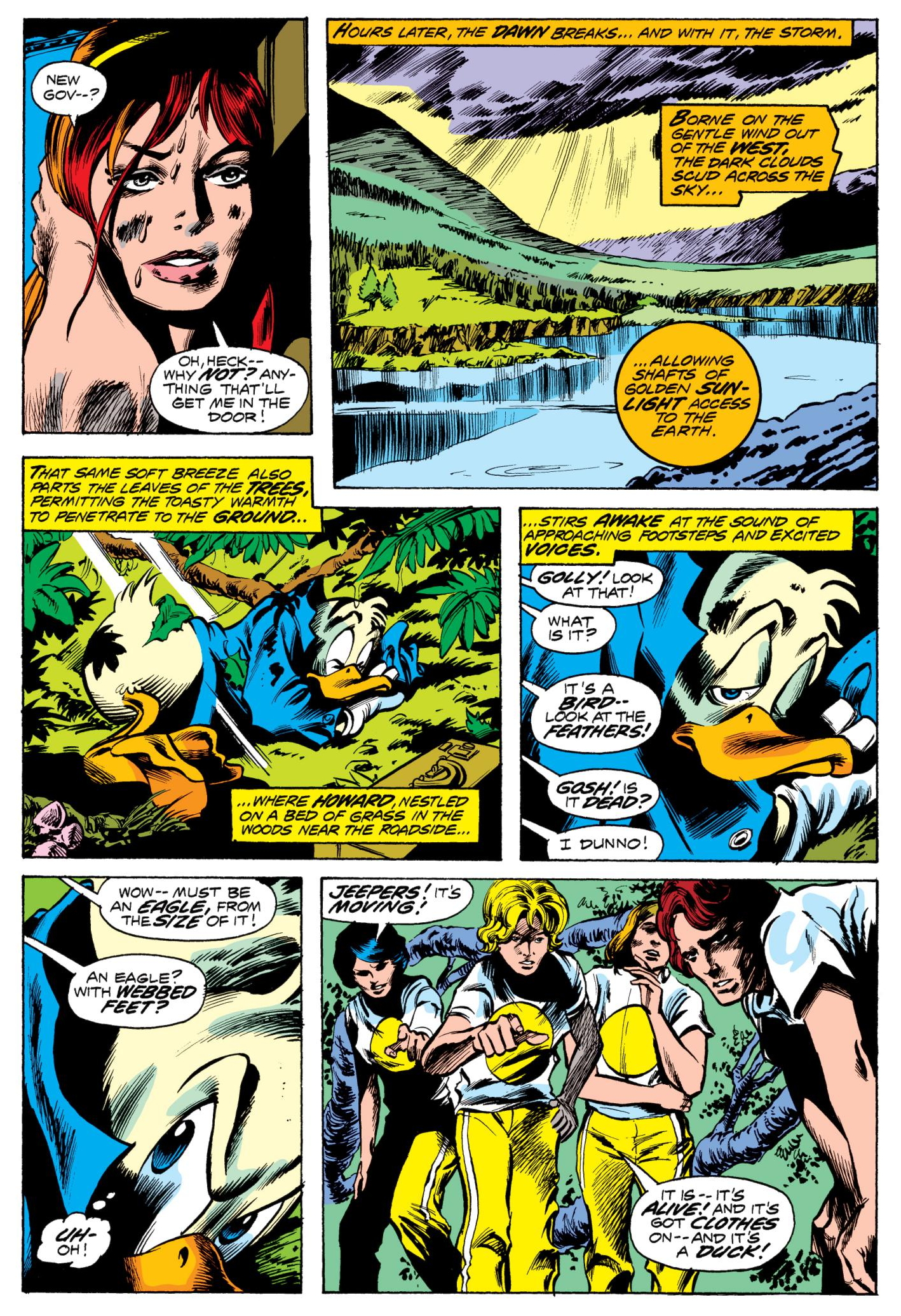

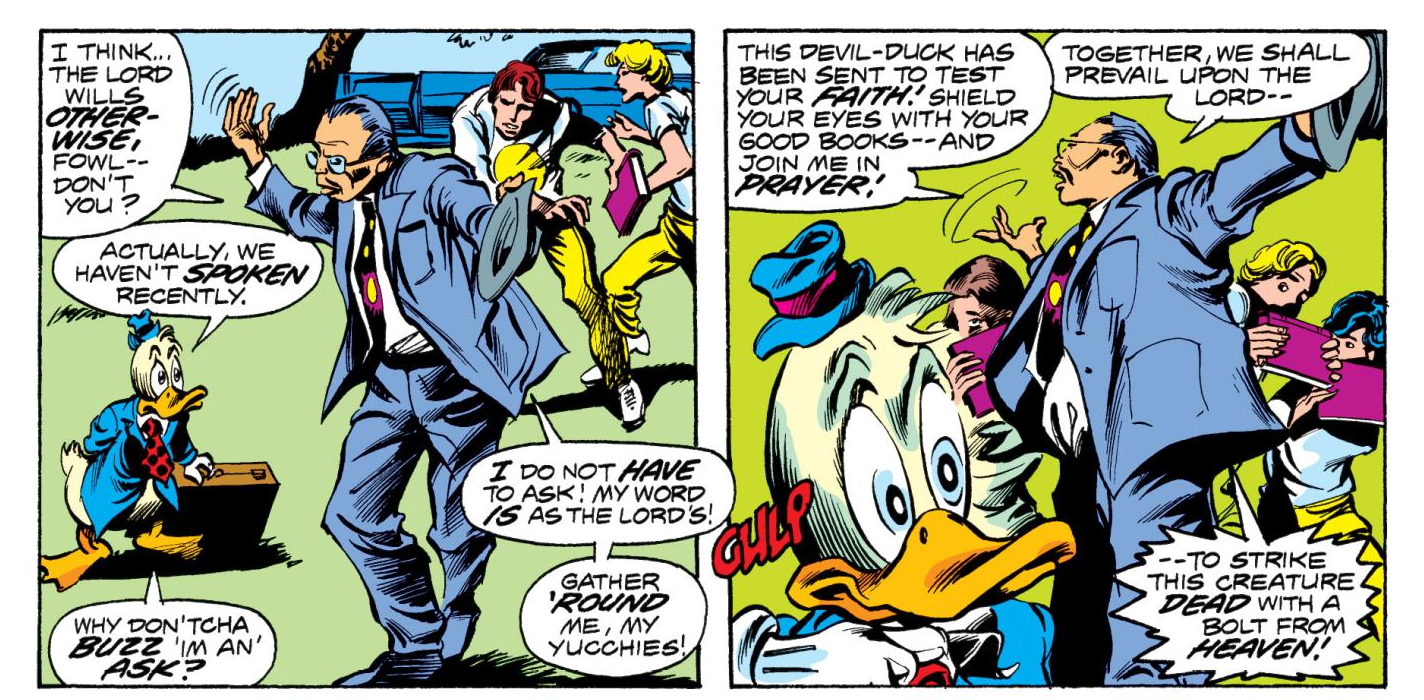
The Rev. Sun Myung Moon (1920-2012), as well as the Unification Church he founded (the members of which were popularly known as “Moonies”), became well-known in the U.S. in the early-to-mid-Seventies thanks to such factors as Moon’s fervent support for Pres. Richard M. Nixon in the midst of the Watergate scandal, and the mass wedding ceremonies in which multitudes of couples were simultaneously united in holy matrimony. Often described as a cult leader, Moon — and his movement — were unquestionably legitimate subjects for satire in 1976; that said, from the perspective of half a century later, it’s hard not to wish that Steve Gerber had resisted the urge to utilize the Reverend’s “foreign” name as the basis for comedy.


That last panel allows Gerber the opportunity to reference not one, or even two, but a whole three classic works of Gothic fiction on a single business card: Nathaniel Hawthorne’s The House of the Seven Gables (1851), Emily Brontë’s Wuthering Heights (1847) (whence comes the name “Heathcliff”) and Emily’s sister Charlotte’s Jane Eyre (1847) (ditto for “Rochester”).
However he’s come by his name, real estate broker/lifestyle consultant Heathcliff Rochester is eager to make a deal regarding the Dragonworth property — but time is of the essence, he tells Howard. “The townspeople are up in arms about having your… unconventional religious cult at such close proximity.”


Patsy assures Beverly that this is nothing unusual: “This happens once a week like clockwork.” Nor is there any cause for alarm: “Heathcliff will drive them away… with the hounds.”


“Love is strange,” says Howard, and who among us would disagree? Maybe these two crazy kids will make it work. (By the way, I’m pretty sure this is the most direct confirmation we’ve had yet that Howard and Bev are in fact more than “just good friends”, however strongly it’s been implied, both verbally and visually, up until now.)
Following Bev into the house, Howard makes the acquaintance of both Patsy and her mother, and then…


Up until this point, our storytellers have been riffing primarily on the tropes of Gothic romance, but we’ve now taken a decided turn towards the Gothic horror typified by Mary Shelley’s Frankenstein (1818) — although all of this electrical equipment actually hearkens more to the 1931 film version and its numerous successors than it does the original novel (as did the earlier attack by the townspeople, for that matter). Of course, this milieu was very familiar ground for artist Gene Colan, who’d been drawing Marvel’s Tomb of Dracula title since its inception five years before.


And now, finally, we’ve arrived at issue #7 — which, we should note, was the very first issue of Howard the Duck to arrive on stands just one month following its predecessor, as the ever-more-popular title got a bump up from its original bi-monthly publishing schedule:

Beverly and Howard attempt to depart the lab the same way they arrived — but, alas, the door is locked. (Yes, they’d already tried that at the end of issue #6, but Steve Gerber apparently forgot he’d written that line, so we will too.) Along with the others, they’re trapped inside with what may well be the world’s first carnivorous gingerbread man…


And that’s that — five pages into the continuation of last issue’s story, it’s over and done. While blowing up everything (and, with the exception of our two series regulars, everyone) certainly makes for a spectacular finale, I dare say that, considering how many characters and concepts Steve Gerber had endeavored to squeeze into the preceding chapter, this resolution feels pretty darn anticlimactic.
I suppose that Gerber may have simply tired of sending up Gothic genre tropes and wanted to wrap things up quickly; on the other hand, I think it’s possible that there was some confusion involved with HtD‘s changeover to a monthly publication schedule. Perhaps the author originally thought that the new frequency was starting with issue #6, rather than with #7, and that he’d thus have a whole second issue to complete the “Forbidden Cookies” storyline before proceeding to the “2nd big laff riot” referred to in #6’s “next” blurb as “The Manchurian Duck — Part One!” I don’t suppose we’ll ever know for sure, either way… though, just for the record, this sequence did indeed write finis to Patsy, her deranged mom, her cookie creature, and Mr. Rochester; at least, they haven’t shown up again in the last half-century. (Rev. Yuc and his Yucchies, on the other hand, would return.)
And now, back to our book:

To the best of my knowledge, the flamboyant Mr. Dreyfuss Gultch isn’t based on any real country music star (I could be wrong, though).

Say what you will about that last panel, but if nothing else, it was fairly daring territory for a Comics Code Authority-approved color comic book in 1976.


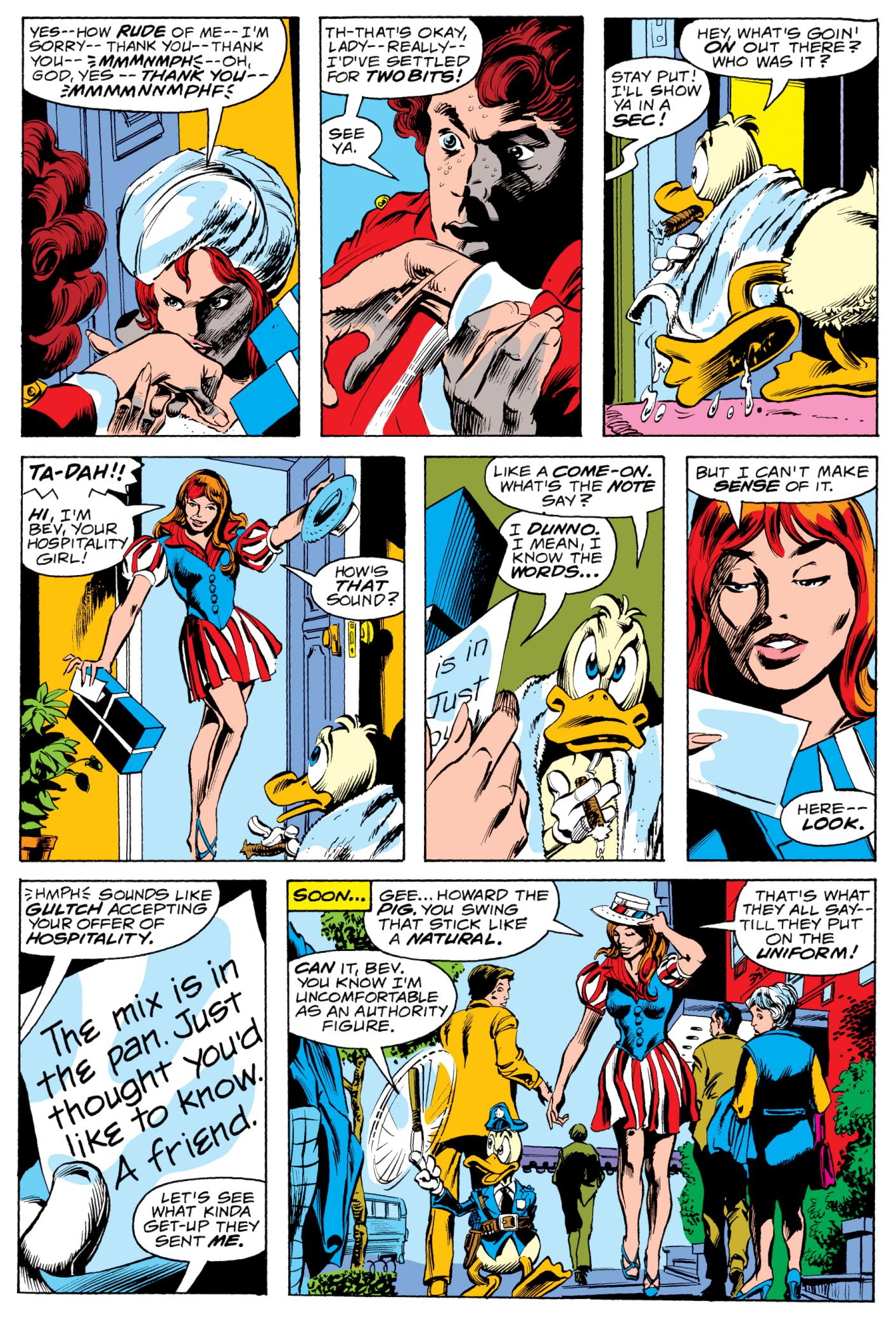
Once they arrive at the All-Night Party’s convention site, Madison Square Garden, Bev and Howard part ways so they can report in to their respective management offices: she to Hospitality, he to Security:

Doing as he’s been told, Howard begins to amble around aimlessly — but, almost immediately, he hears a scream coming from beyond a closed door. When he bursts in, he finds he’s interrupted nothing more serious than a particularly contentious committee meeting; still, despite order having already been restored, Howard decides to hang around for a minute or two…
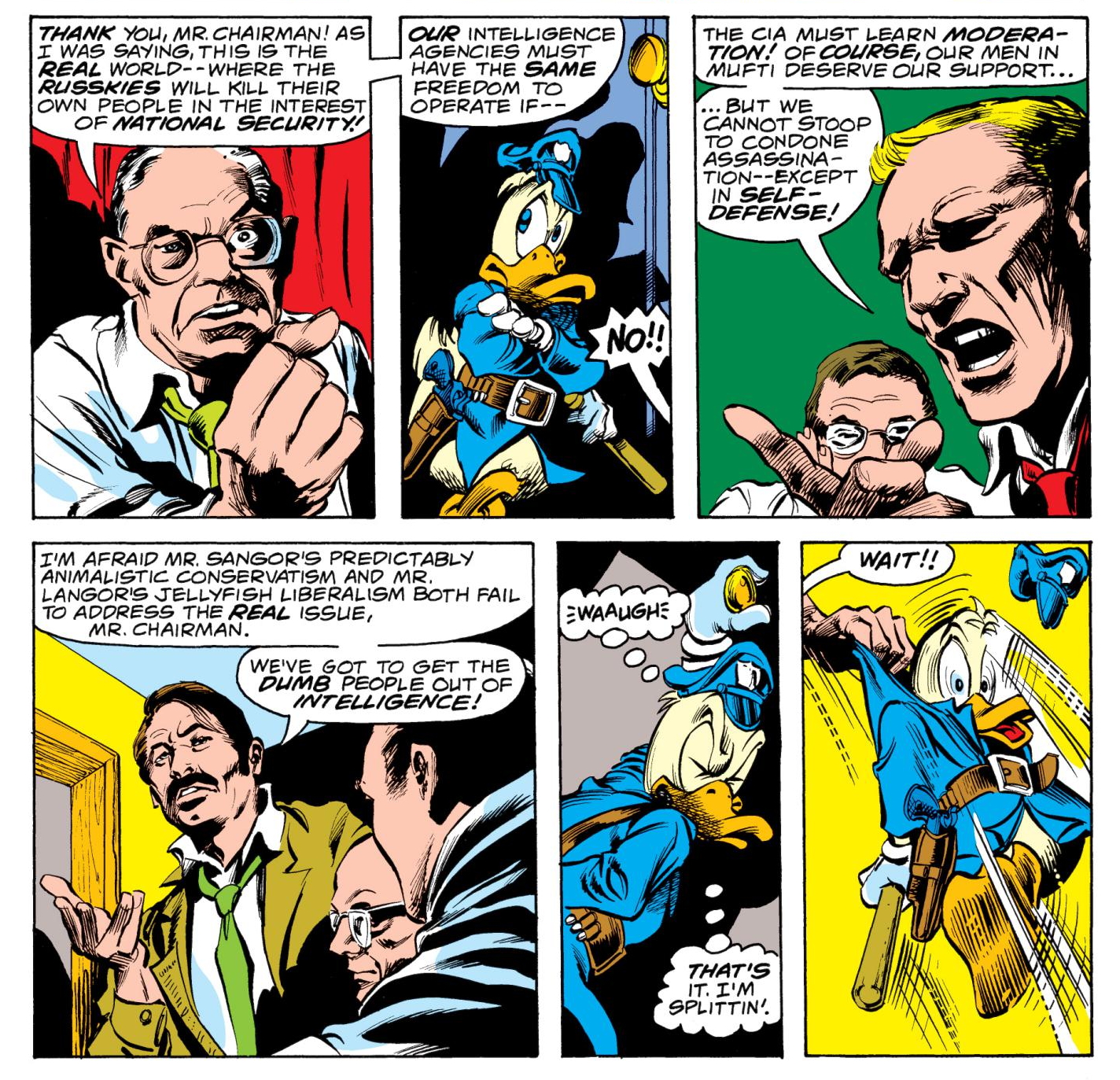

Once their shifts are over, Howard and Beverly return to their hotel room, where they discover another note has been slipped under the door in their absence. “Oboy,” says Howard, “the Prairie Troubadour must’a have stopped by again.”


Having observed this last exchange, Dreyfuss Gulch approaches Howard to tell him he likes his style, and then invites him to join him and “some o’ the party bigwigs” for a night out on the town. Figuring he could use a little distraction, and not having any other plans for the evening, Howard accepts.


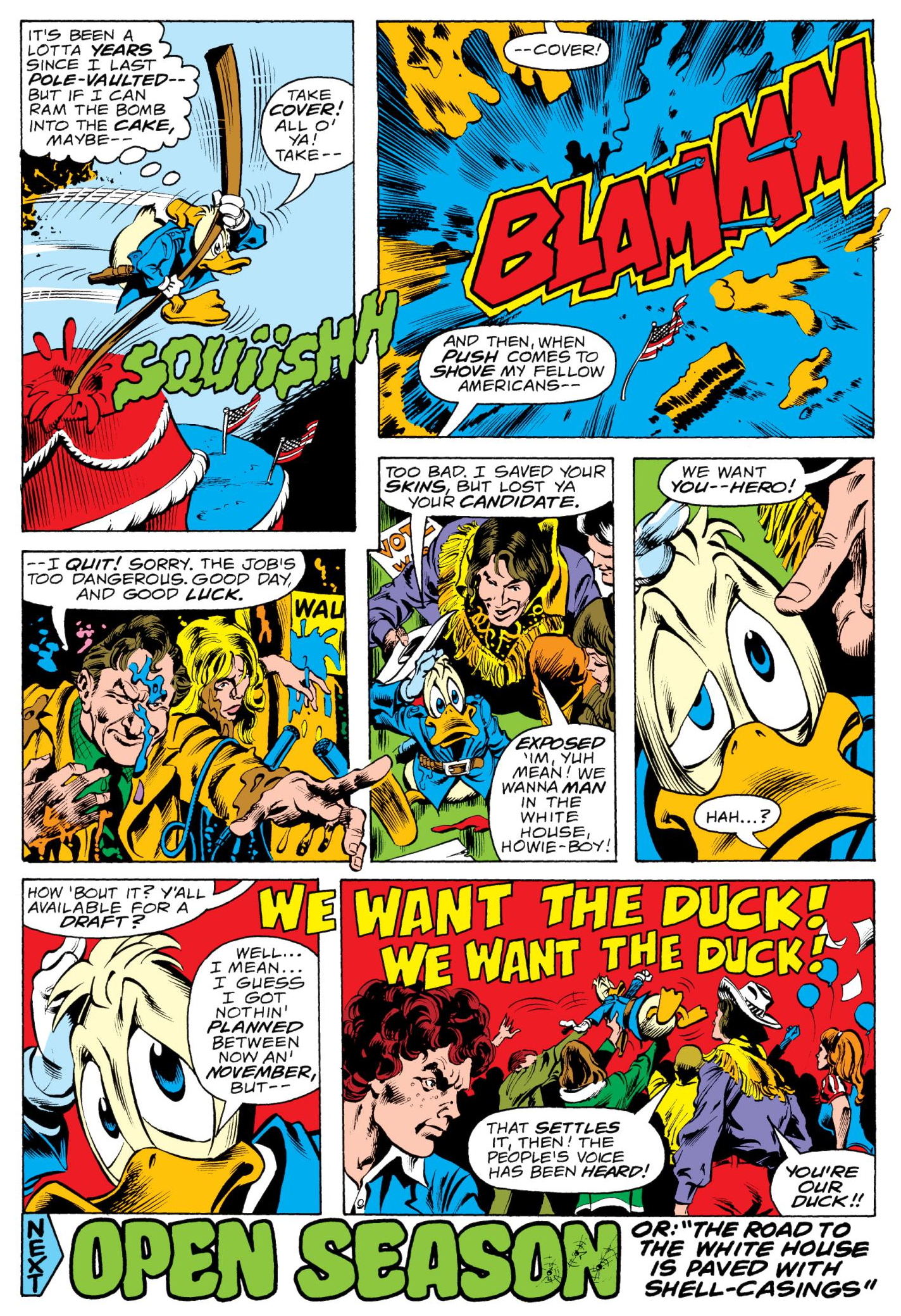
Recognize the curly-haired dude in the foreground of that last panel? Yeah, that’s the same hotel bellhop/nightclub waiter who was clearly responsible for delivering all of those cryptic notes to Howard and Beverly over the last ten pages or so. Anybody want to bet that we’ve seen the last of him? Nah, I didn’t think so.
Still, that’s a mystery to be taken up next month, in Howard the Duck #8. For now, it’ll have to be enough that the series’ storyline has finally caught up with the “reality” of Howard’s Presidential campaign — which, you may recall, has been a thing ever since it was launched in the letters column of issue #4, a whole five months ago. Ever since then, Steve Gerber has been providing monthly updates (and, yes, hawking campaign merchandise) in the HtD lettercols — all the way up to the present month of September, 1976, that is, when it’s spilled over into the letters pages of Marvel’s other books, with new updates appearing weekly.
Also showing up in or around September: FOOM #15 — an “Extra=Special Campaign Issue!” of Marvel’s in-house fanzine, featuring a classic wraparound cover by Gene Colan and Steve Leialoha that proves that, regardless of who else in the Marvel Universe might deign to vote for Howard the Duck, he’s already got the solid support of his fellow stogie-smoking characters:

(For the record, Wolverine’s fondness for cigars wouldn’t be established for another few years yet.)
 Anyway, that’s it for September’s duck-tivities. As already noted, our favorite talking fowl’s quixotic quest for the nation’s highest office will be kicking into high gear next month, in Howard the Duck #8 — and we will of course be here to bring you full coverage from the campaign trail. But before getting to that one, we — along with Howard and Beverly — will be taking a slight detour to a certain Sanctum Sanctorum in New York’s Greenwich Village. I hope you’ll join us for “The Duck and the Defenders”, coming your way just two weeks from now.
Gerber, Colan, Leialoha, HtD, 1976. Sheer bliss!
Hi, Alan,
About seven or eight months before this issue came out, I got to see and shake hands with Steve Gerber, who was speaking at a convention. (Think it was one of Phil Seuling’s, although it might have been a mainly Marvel con. I believe it was the same convention where I had my 17-year-old heart broken by learning that Steve Englehart had left Marvel.)
Anyway, Gerber (as you might expect) was witty and irreverent and entertaining as all get-out. HOWARD had just taken off as a phenomenon, and most of the questions related to him.
At one point, someone asked, rather half-jokingly, if Gerber would ever write a story with a happy ending. Gerber replied, “Well, the ending of issue #6 is happy, even though a house falls down and kills six people.” This was greeted with hysterical laughter, as one might expect.
So when #6 came out, I was a little surprised that the house was still standing at the end, and the story wasn’t even finished. My assumption at the time – and it’s one I still hold to – was that Gerber had put too much plot into the story OR Gene Colan wanted a bit more space for the atmospheric touches like the mostly full-page shot of the laboratory. We are talking about Marvel in the 1970s, when the Marvel method ruled, and the penciller was a bit more in the driver’s seat. I’m sure Gerber and Colan had talked it over, and perhaps with Howard going monthly, Gerber felt a bit more comfortable having the story spill over into #7. And maybe, just maybe, it was a deliberate effort to give #7 a more standard action cover, rather than coming up with a cover advertising a story set mainly at a political convention.
Anyway, there were some great satirical bits here, and the little grace notes remind me of why I loved Gerber’s scripts so much. “The spelling IS better than you’d expect.” “I can’t let even a politician die.”
With Englehart and McGregor gone and Gerber off DEFENDERS, HOWARD was one of the relatively few books regularly keeping me going at Marvel by late 1976. (TOMB OF DRACULA being another.)
And the satire would only ramp up with the next issue! In the interim, I will look forward to revisiting the Treasury edition in a couple of weeks.
Thanks again for the memories, Alan! And to anyone on the East Coast, hope the nor’easter doesn’t affect you too much!
Thanks for sharing that con anecdote, Bill! I never got the chance to meet Gerber in person, so I’m envious. 🙂
Actually saw Gerber at a couple of cons. Not only that, I interviewed him by phone for about an hour around the time that NEVEADA was published by DC/Vertigo. In fact, he even recorded a promo for the college radio station that aired my show. (The station was based at acollege, but allowed community members to do shows, because I was – ahem – well past college age when when I had the show.
“This is Steve Gerber and Bolero the Ostrich – wauk, wauk, wauk, wauk – and you’re listening to WNTI, 919.FMin Hackettstown, NJ.:
I also got promos from Steve Englehart, and Neil Gaiman (who also recorded one specifically for my show). And John Ostrander – who only lived about a half-hour from where I live) was on my show a BUNCH of times, once with his partner-in-crime Tom Mandrake.
The name of my show? “The Nutt-House,” of course.
Wacky stuff! And very entertaining.
Dreyfuss Gultch appears to be loosely based on Glen Campbell who had a similar hairstyle and attire at the time, and a number one hit in 1975, “Rhinestone Cowboy.”
I didn’t think of that at the time but reading Alan’s summation, Glen Campbell popped into my mind as the most obvious inspiration as well.
Kudos to “Man” as I wholeheartedly agree that Dreyfuss has to be based the former Beach Boy and future “Rhinestone Cowboy.”
The Flying Lizards version (the best in my opinion) wasn’t out until 1979 so I’m thinking the Beatles version is the one that inspired Gerber’s title.
The Beatles’ version was still getting a lot of airplay on the Fresno AOR station I listened to in 1976. It played both current Top-40 songs as well as a lot of classic rock, with the main cutoff year being 1964 as they played a lot of Beatles songs along with other big hits from the British Invasion era but rarely anything older than that. I knew that “Money (That’s What I Want)” wasn’t an original by the Beatles, but as of 50 years ago, I don’t think I’d yet heard the original version. The Flying Lizards’ version did get played on that radio station too in 1979; on first listening, I thought it was too weird but it grew on me and I love it now, just as I also love Devo’s version of “Satisfaction”.
Mick Jagger loved Devo’s Satisfaction too. I remember reading he liked that they unlike most others didn’t try to pae the Stones’ style.
The Flying Lizards also did a delightful deconstructionist version of Summertime Blues. Deborah Evans-Stickland’s deadpan cut glass accent shining through.
Love The Flying Lizard’s version of “Money”! I used it as part of a playlist for a relay race I ran a couple years back – along with a boatload of alternative rock songs from 1979 (i.e. David Bowie, Madness, Buzzcocks, Talking Heads, etc.).
I was born in 1976, so until today The Flying Lizards’ version of “Money” was the only one that I knew. Thank you to Alan for the education that the song was originally performed by Barrett Strong.
Not that anyone asked, but my introduction to this song was the Berry Gordy Jr-Janie Bradford one used in the Animal House soundtrack. We watched that movie every single weekend when it finally arrived in my corner of Oregon. Which is ironic since it was filmed less than an hour from where I lived. I can even spot a couple extras that I know in the movie.
Just for the record, Rick, Gordy and Bradford were the songwriters; John Belushi performed the version on the AH s’track (and hewed pretty close to the Barrett Strong original, at least to my ears 🙂 ): https://www.youtube.com/watch?v=ukrx6JW5yVI
D’oh! You are absolutely correct, Alan. Rick must now hide his head in shame for that oversight.
A little over a decade ago my girlfriend Michele or purchased Howard the Duck #6-9 and the Howard the Duck Treasury Edition at some comic book convention or another. Michele is a fan of Howard. I’m not sure how we ended up with these specific issues in our household, as they just so happened to represent the entire “Howard the Duck for President” storyline, but that’s how it happened to work out. As Alan has blogged in previous installments, and as we’ve observed in the comments, Steve Gerber’s writing on HtD could be uneven, with his reach sometimes exceeding his grasp. But I do feel that these five issues really represent some of his very best work on the series.
I must also credit Gene Colan & Steve Leialoha for their excellent artwork on the issues covered in this blog post. I’ve previously mentioned my fondness for the Colan & Leialoha team. They really do a stellar job here, very effectively illustrating Gerber’s sendups of religious cults, gothic romance, Frankenstein, and American politics. That’s definitely diverse territory, but they handle it all very well indeed.
By this point in 1976, Howard the Duck was one of my favorite comics even if some of the humorous references went over my head at the time. HtD #5 pretty much sealed the deal for me. Although I was still too young to have had to deal with the difficulties of having to go out and get a job to pay the bills, etc., Howard’s troubles in maintaining his dignity and resisting hardening himself for the sake of squeezing money out of the poor resonated with me. Revisiting “The Secret House of Forbidden Cookies” made me think of other then recent parodies of gothic tales, Young Frankenstein and The Rocky Horror Picture Show. The fairly brief ending of the story in issue 7 and beginning of a new storyline also brings to mind Kirby’s tendency to do that in the FF & Thor in the mid-60s. Of course, with Howard’s winnings from his bout against the Goat, seems they might have had sufficient funds to purchase bus tickets to get to NYC rather than resort to hitchhiking, although we can imagine scenarios wherein they thought they had a free ride until Howard screwed it up for them with his bad temper and refusal to be accommodating, as strongly hinted in the dialogue.
Howard’s unexpected rise as the “dark duck” (rather than “horse”) of American politics was rather amusing. I’d missed earlier parodic presidential runs, such as by Pogo, in previous decades, although in the ’80s I got the campaigns of Bill the Cat in Bloom County. Of course, in the real world, any candidate from another dimension or even a counter-Earth would be constitutionally barred even if from another version of the United States of America, but in an imaginary world we can overlook that little quibble.
Thinking over HtD overall, although some people may gripe that the mag is too much of its time, as with much comedy, my take is that a lot of the humor is still very relevant even 50 years later. We still have money troubles; politics have gotten far more absurdist than they were in the ’70s; gothic tropes are still a common, well-known part of our culture, etc. Yeah, a lot of cultural details have changed, mainly with the advent of personal computers and “smart” phones and the like, but many of the problems of the ’70s are the same or even worse. Men in power are still prone to giving in to their lusts. Poverty, racism and sexism are still problems. And many more massive towers can be built from discarded credit cards in the present than Pro-Rata could have dreamed of in 1975. 2026 is mildly more futuristic than 1976 but hardly a problem-free paradise. I have no idea if any current 14 year olds may find any of Gerber’s HtD mags as fun to read as I did, but I wouldn’t rate it as an impossibility.
Just some musings on long-past amusements. Enjoyed re-living this blast from the past through your own remembrances, Alan!
Going along with your final paragraph, Fred, I recall that when Steve Gerber relaunched Howard in early 00’s, he said that the respective era’s weren’t that different in that we’d had an idiot in the White House then and we had one now. I can only imagine how Gerber would have handled Howard with the current administration in DC.
If Steve Gerber were still alive today (and I really wish that he hadn’t passed away so young) I imagine that Marvel would probably be much too hesitant (or just too plain cowardly) to let him use Howard the Duck to directly satirize & criticize Drumpf. But I doubt that would stop Gerber for long, and he’d probably either resurrect Destroyer Duck or conceive of some new creator-owned series to brutally & brilliantly skewer our would-be Mad King.
I like to think so, too.
Coming down from my caffeine buzz of the morning, I’m imagining an alternate universe where Trump goes after Steve Gerber and Marvel Comics instead of major universities and law firms. In this not too far off counter realm, we see that in order to appease the Chief Executive, Marvel has to bring him into their 616 world, with him more powerful than Thor, the Hulk or any other character and leading the Avengers, FF, X-Men and Great Lake Avengers.
Now if you’ll excuse me, my red headed wife is telling me it’s time for my nap.
I’m of the opinion the Trump of 616 got himself whacked by the Kingpin years ago.
They’d have to know each other from the NY real estate world, and Fisk is precisely the kind of powerful leader that Trump gets mancrushes on. Fisk would only tolerate that so long, plus he’d have nothing but contempt for the way Trump treats his wives. Finally, he’s had enough.
Siiigh.
Like Mad magazine in the ’70s, there is a lot of in-the-moment topical humor in Gerber’s Howard the Duck scripts. A 14 year old today may not get the Sun Myung Moon spoof or the multiple puns/wordplay in a name like Dreyfuss Gultch ( Dry Gulch being a cliché western name for a saloon, and Richard Dreyfuss being a Jewish American movie star after his breakout hits “American Graffiti” and “Jaws” ).
I imagine Gulch was just intended to be the archetype of the rhinestone cowboy, as the world heard so much if the year before in that monster hit. Seriously, you couldn’t escape it, even in New York.
Hey, in those days, NYC had a country radio station! Plus, a couple of years later you had the URBAN COWBOY phenomenon.
I really hadn’t connected Drey Gulch (get it?) with Glen Campbell until now, but it makes a certain sense. I actually liked Campbell to an extent, and my appreciation has only grown for his guitar skills (seriously underrated) and his covers of Jimmy Webb songs.
I love the sings Galveston and Whichita Lineman. One of my cousins, 5 years older than and who never left the small town in Texas, Mineola, where he was born raised and died about 10 years ago, thought the latter song was about football, which he loved with a passion. He had hoped to play in college and dreamed of becoming a professional player but seriosly hurt his back playing football in his senior year of high school and that put the nail in those asperations. He died of Lou Gehrig’s disease. The last time I saw him was in June 1976, when my family attended his wedding.
I prefer the original version of Jimmy Webb’s “MacArthur Park” by Richard Harris, backed by the Wrecking Crew, but Glen Campbell did a good cover of it, though slightly abbreviated. Glen did score hits with Webb’s “Wichita Lineman,” “Galveston,” and “By the Time I Get to Phoenix.” I also enjoyed his performance in the 1969 “True Grit” film. When this issue of Howard the Duck came out, Glen was one of many celebs who had a blink-and-you-missed-it variety show on U.S. television.
The Glen Campbell Good Time Hour, from 1969 to ’72. I remember seeing at least a few episodes after my family returned to the states from Japan in 1970
I also remember seeing a few episodes of Johnny Cash’s tv show, as well as Dolly Parton’s in the later ’70s. I never got into country music, although that was my dad’s favorite genre. I liked a few country songs, but was much more into various shades of rock music and later got into classical music as well, although I certainly wouldn’t claim any expertise in that!
I know I watched Glen Campbell’s show. Like a lot of kids I’d pretty much watch anything, whether it was theoretically to my taste or not.
And as others have said, Campbell was big enough to be worth parodying, though I don’t know if I’d have picked up on Mr. Gulch as a send-up.
The Glen Campbell Good Time Hour was a sacharine summer replacement for the much edgier Smothers Brothers Show. I watched both. Campbell celebrated his debut in the movies with a big musical number of the appropriate song, “They’re Gonna Put Me in the Movies.”
*Everyone* had a variety show, it seemed, but so many were short-lived. Mac Davis had one. Many remember Sonny & Cher, but few recall a Sonny solo show. The Captain & Tenille had one. And so on.
And let’s not forget, Donny and Marie Osmond.
A whole bunch of these variety shows were the product of Sid and Marty Kroft, better known for Land of the Lost and HR Pufnstuff. They were Donny and Marie, Barbara Mandrell and a few others.
Oh man. My sister loved that show. Having it on every Friday night meant hiding in my room or staying at a buddy’s place!
The fricking STARLAND VOCAL BAND had a series for four weeks!
“Fun.
That’s the word I use to describe the issues of Howard that Alan reviewed today. Although I never read them – thanks to poor distribution, it wasn’t until #9 that I met the Feathered One again – there seemed an element to each that I best describe as “fun.” A decent mixture with enough sophistication to engage older readers as well as sufficient silliness to have kept a wee lad of almost sixteen like myself flipping those pages. And of course, enough of the unavoidably sexy Beverly to keep maintain my attention if a scene went over my head – more on her later!
Although, as it’s been stated, the writing and pacing were uneven, I still give Steve Gerber props for making all of this somehow work. I mean, put yourself in his place. You’re supposed to write about an anthropomorphic duck set in our world. Sure, you can spoof a few entertainment genres. But what do you do to maintain any consistent flow to such an absurd premise? I’d argue that even absent the delightfully insane run for the Oval Office, Gerber had successfully threaded that incredibly tiny needle.
Now for Beverly. Thanks to Alan’s stellar diligence with this review, I now fully comprehend why it is that with women, I’ve always had a preference for redheads. I now fully grasp why I fell so hard for my wife when we first met. It goes back to early 1973 when I started collecting more comics. There was Pepper asking Tony for a job in a short skirt with red boots. Then I’d see always eye-catching Mary Jane over in Spider-Man consoling Peter after Gwen’s sad passing. Even that blind guy, Daredevil, had that hot Russian spy, Natasha Romanov, in his life. Then we come to Beverly Swisher, a woman every artist to touch this book goes out of their way to make absolutely stunning. What was an impressionable young guy to do? Damn you, Marvel Comics!
On that note, I’ll echo Bill’s wishes that everyone in the NE stays safe!
You married a redhead????
Face it, tiger, you hit the jackpot!
And you made my wife’s day, Bill – once I showed her that wonderful SM panel introducing MJW and that classic line.
Two of my cousins, daughters of one of my dad’s younger brothers, were redheads. Only saw them a few times during my early childhood, then after 20 years, saw them at a family gathering near Paris, Texas – their father, my uncle Steve, was the only one of my dad’s four brothers to stay on the nearby farm where they were raised. Dad joined the navy to get away from the farm! Anyhow, both my redheaded cousins had grown into very beautiful women. The elder was married and had two children of her own. The younger, Kathe, was wilder and eventually came out as a lesbian, much to the consternation of my uncle John, who was a holier than thou bible thumper and very bigoted although he somewhat softened his stance before he died, coming to accept his bi-racial lesbian granddaughter.
This is not interesting, although it might be somewhat interesting to this audience, but, after reading Alan’s latest excellent look at Howard late last night, this morning I hit my local flea market that features a booth usually overflowing with coverless Bronze Age comics and battered issues of Richie Rich … and found a bagged-and-boarded, brand-new looking, complete run of Howard the Duck from issue #2 to issue #14. So that was a little bit of 50-Year-Old-Comic serendipity, and I’m looking forward to perusing Howard in depth and then going back to re-read Alan’s thoughts on the series. Thanks for all you do, Alan.
Busy, busy day today, folks, so I’m not sure I even had a chance to fully appreciate this week’s comic, but I will say that along this time, Howard became a real “up and down” pleasure for me. Not so much of the “down.” I doubt Gerber could really write a bad story unless he were drunk, over-medicated and high on his own supply, but still, you could tell on occasion that he was making this stuff up as he went a long and Piece A didn’t always fit into Slot B as neatly as he’d intended. Oh, he was still better on his worst day than 90% of the other guys writing comics were on their best days, but the seams were showing and I remember commenting to a friend fifty years ago (not Alan, I had other friends, you know) that it sometimes seemed like Gerber was running out of ideas for Howard.
Don’t get me wrong. I enjoyed the Vampire Cow story, the Space Turnip, the Sleeper and the whole Presidential run, but the Presidential run, as we’re about to see, lost a lot of it’s subtley as Gerber went for the broad strokes of the satire. Understandable, given the scope of the subject, but the comic lost some of the grace from it’s story-telling during that arc. I did enjoy the upcoming Defenders team-up, so there was still plenty to love here, but around this time, Howard stopped being quite a sure a thing for me as it had been.
Did anybody notice that Patsy kept switching clothes with her mom during issue #5? Obviously, the colorist was having trouble keeping Patsy and her mom straight, but several times in the back half of the issue, Patsy was clearly wearing her mom’s magenta dress. And then, on the opening page of #6, which begins mere moments after the end of #5, the poor child is in a different outfit all together. I guess switching to a monthly schedule really did catch everyone off guard.
Lastly, if you guys say Drey Gulch is supposed to be Glen Campbell, I believe you. I don’t see it, but I’ll take your word. I met Mr. Campbell once, back in my radio days during his tumultuous relationship with Tanya Tucker, and he was a true gentleman. According to the tabloids, he had quite a temper, but he was lovely with us. He couldn’t act to save his life (True Grit and Norwood), he seldom wrote his own songs, but the only reason he’s not considered one of the greatest guitarists who ever lived is because of the stigma of being a Country artist. A phenomenal talent. Thanks, Alan!
Again, his facial features weren’t modeled on Campbell’s, but his hairstyle, clothes, and persona are definitely a send-up.
As for country musicians not getting respect as technicians, I have to disagree. Roy Clark was well regarded as a guitarist during his lifetime, and Albert Lee won a lot of Guitar Player polls for his finger picking. Bela Fleck plays bluegrass banjo, but is able to play J.S. Bach baroque music, jazz fusion, and any other genre you can think of. He is a world class musician who never forsook his country roots.
I agree the Gothic Cookie story wrapped up overly fast though I’m sure it didn’t bother me at the time — just one more absurdity in an absurd book.
2)”The Manchurian Duck” makes me think Gerber changed course between issues as I don’t see anything that resembles a Manchurian Candidate plotline.
3)While I enjoyed Howard’s presidential run at the time, and it’s still fun, I realize reading Alan’s review that it’s also part of a long tradition of satire assuming that if it wasn’t for politicians, running the country would be perfectly simple — everyone knows what really needs doing, politicians just refuse to do it. Which is simplistic (I blogged about it here: https://frasersherman.com/2017/10/26/the-dream-of-an-outsider-sfwapro/) but appealing. Still, in this case it mostly works (we’ll see what I think as this arc progresses).
And they always assume the President would have absolute power to do whatever they want without regard for Congress or the Supreme Court. Our current president is thus far the closest we’d yet had to such a willful tyrant and it hasn’t gone over all that well. Any third party candidate who somehow winds up as president would have significant problems getting their agenda passed because unlike the sleezebag in chief, a 3rd Party Prez under current conditions would not have the fawning fearful support of a majority in either house of congress or a U.S. Supreme Court that almost always rules in his favor, regardless of the actual language and obvious intent of the federal constitution.
One thing I like about this site is that the replies are as long and involved as the original post – a very meaty read!
As someone who missed Howard completely (just never saw it on sale anywhere I frequented), I think I’ve come to realise that I like Gerber’s stories better when there are no superheroes involved.
Only two things I can add to the conversation: I thought Dreyfuss Gulch might be some sort of reference to Robert Altman’s “Nashville” movie, released the year before, and itself a scathing comment on matters American.
The other thing was I presume everyone who saw Bev’s comment about eating each other being understandable in the Andes was a reference to that aircrash in the Andes four years earlier wherein the Uruguayan football team had to resort to cannibalism to survive (one would expect anyone under, say 50, wouldn’t know what you were talking about if mentioned).
That one might still be comprehensible — stories of cannibalism have such a lurid fascination.Though I admit I wouldn’t bet money on that.
Baden, I have to confess: “cannibalism in the Andes” has been so thoroughly ingrained with me that I never considered it might need explaining as a topical reference! Thanks for bringing it up.
Or an reference to the more local but more distant in time Donner Party. Jeffrey Dahmer would have still been in high school, already deeply disturbed but still a few years away from having somebody for dinner — as the main course. Derf’s graphic novel, My Friend Dahmer, ended the story just before Dahmer committed his first act of horror, but still a very unsettling story. (Derf, for anyone who doesn’t know, had a comic strip in many weekly newspapers around the country and had been a classmate of Dahmer’s. When his wife called to tell him that one of his high school classmates had been arrested for a hideous series of murders, Dahmer was actually his second guess as to who it might be).
That makes me really worried who the first person he thought of might be!
I will take the opportunity to recommend A. Brian Simpson’s “Cannibalism and the Common Law” which discusses a 19th century case of “the custom of the sea” (you’re shipwrecked, you’re hungry, the needs of the many take precedence …) that became a case celebre for a while. Very interesting to learn how many incidents of this there were and how casual people usually were about it. I also learned more about American land cannibal Alf Packer than I knew before.
There were some later films that depicted it, like “Alive” in 1993 starring Ethan Hawke. In the ’70s the closest we got in the U.S. was the 1975 TV movie “Hey, I’m Alive,” starring Ed Asner and Sally Struthers, surviving 28 days in the Yukon by eating . . . snow! It was a true story, though.
Gerber’s plot disconnects in following issues where the hotel bellhop/nightclub waiter is revealed as trying to prevent a duck (like the one who killed his brother) from becoming President, except that Howard was nowhere close to becoming President until the hotel bellhop/nightclub waiter planted the bomb that Howard rescued everyone from. As has been said before, Gerber’s plots and follow-throughs were sometimes lacking.
I never felt that Dreyfuss Gultch was specifically aimed at Glenn Campbell, I thought he was more of a generic mega-star (even if only in his own mind), than any one individual. The Country and Western basis just seemed like an excuse for a ‘funny’ accent. I’m tempted to say that previous comments spent too much time talking about musical tastes and details, but 50 or so years ago I used to ride in my older brother’s Ford Capri and his favourite (loud) 8-track was Glenn Campbell’s greatest hits… and I loved it!
Don… please can we actually forget Donny and Marie Osmond? Just sayin.
It does feel that in the issues covered, Gerber was a little all over the place. Some of the satire is clever, some feels juvenile (possibly with 50-year old hindsight), but there is a lot of contrivance and coincidence to go from gothic romance to gothic horror to political satire.
Alan, the funny thing about these issues? 50 years ago I thought they were very ordinary, and not worth holding on to. Obviously the satire just went over my head, not living in the US, nor having been exposed to DC’s gothic romance line nor being particularly interested in what was happening in US politics at the time. 50 years on I find all this very enjoyable!!
#5 reminded me a bit of Spidey’s first appearance, and the Frankenstein cookie monster bit may have been a swipe at Wrightson, who had been penciled in to take over the art, but then didn’t to focus on his magnus opus. Artwise I love Leialoha as an artist, inker whatever…and he takes to Gene like a …duck to water. And for Gene…I think #6 was supposed to be an all in one, and Gene is known for getting his story pacing wrong ( but then so did Kirby, who then left us with some delicious left over pencils!), and instead of truncating what Gene had done, editorial wisely let the story run on to the next issue.
Thanks for posting the FOOM cover…nice bit of nostalgia for me and I am looking forward to more HTD reviews in the near future.
In case you missed it, I shared this when Alan reviewed HtD no 1:
It took me a while to find this: in June 1976 cover-dated Marvel titles it was announced that Berni Wrightson would take over the pencilling chores on Howard the Duck, beginning with no. 5. Wrightson was miffed when he read this, because he had not agreed to this at all, despite creating a Howard for president campaign button and poster. You can read it here:
https://imgur.com/QfFYBKH